Table of Contents
In trading, few signals are as powerful or as visually clear as the Morning Star pattern. This classic bullish reversal setup that typically appears at the end of a downtrend tells a story of exhaustion, hesitation, and resurgence, all within just three candles.
When traders learn to recognize it, they gain an edge in spotting potential market bottoms before momentum shifts upward.
What Is the Morning Star Pattern?
The Morning Star is a three-candle formation that appears after a downtrend, signaling that sellers are losing strength and buyers are regaining control. It’s widely used in CFD, Forex, and Futures trading and is considered one of the strongest trend reversal indicators.
Key Characteristics
- Appears after a sustained downtrend
- Consists of three distinct candles
- Confirms a potential bullish reversal
- Works best when supported by indicators or volume confirmation
Identifying this pattern on higher timeframes (like H4 or Daily) provides stronger evidence of a sentiment shift.
The Three Candles Explained
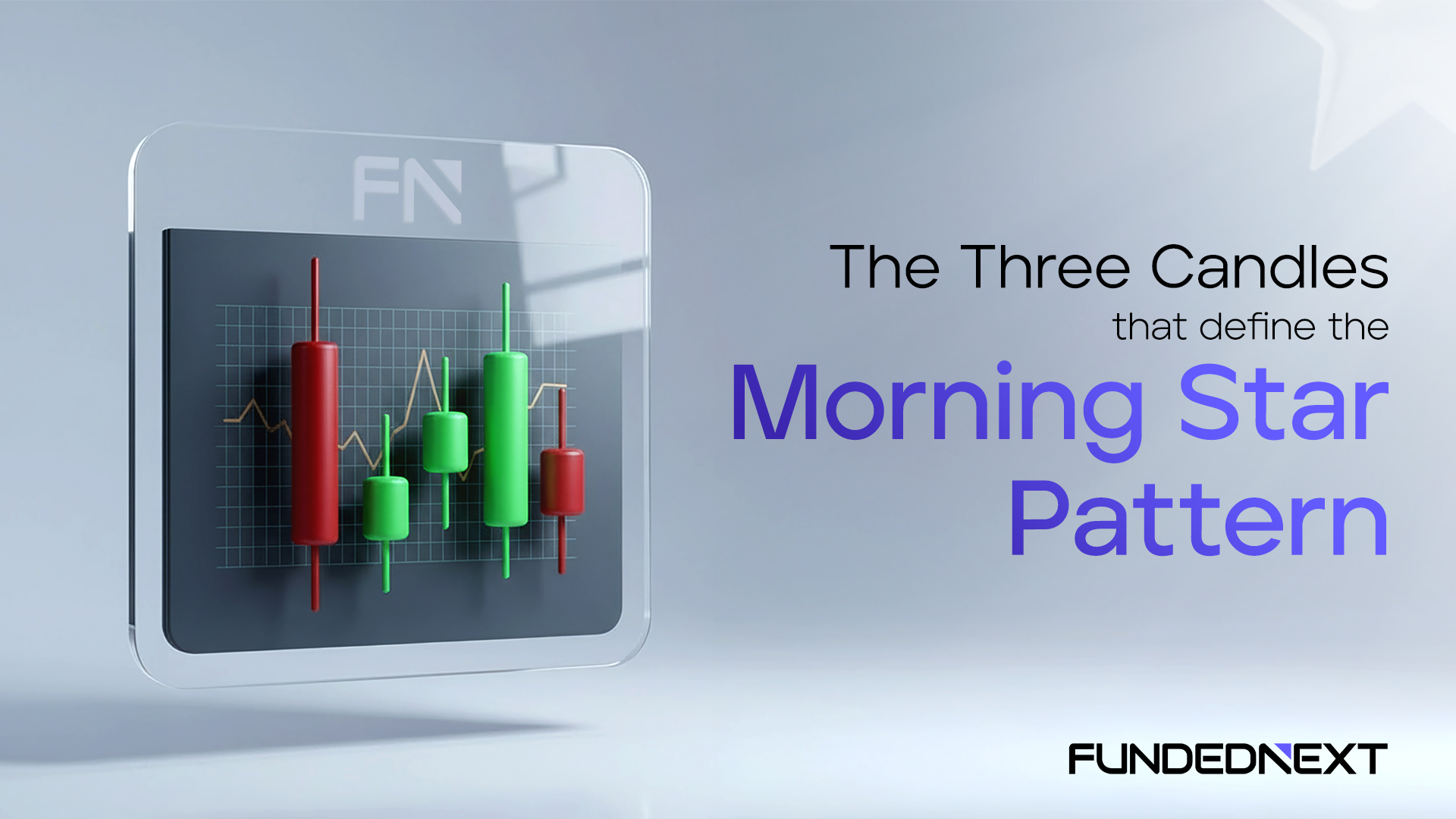
The Morning Star works because each candle represents a shift in control—from strong selling, to hesitation, to buyers stepping back in with momentum.
1. The First Candle: Bearish Momentum
The first candle is a long bearish candle that continues the existing downtrend.
It indicates:
- Strong selling pressure
- Bearish market sentiment
- A close near the candle’s low, showing conviction among sellers
2. The Second Candle: Indecision or Transition
The second candle is the indecision candle, usually a doji or small-bodied candle that often gaps lower or opens below the first candle’s close. However, in Forex or CFD markets, where gaps are uncommon, the pattern can still form without one as long as the candle reflects hesitation between buyers and sellers.
It shows:
- Market uncertainty
- Indecision and reduced momentum
- A potential pause in selling pressure
- Doji variation
Example: After several days of decline in EURUSD, a small-bodied candle or doji forming near a support zone can signal bearish exhaustion and the possibility of a reversal.
3. The Third Candle: Bullish Confirmation
The final candle is a strong bullish candle that ideally closes at or above the midpoint of the first bearish candle. Some traders accept it as valid even if it closes just above the first candle’s close, depending on their style and criteria.
What confirms the reversal:
- A long green body (or white) closing into the first bearish candle
- An open near or slightly below the second candle’s close
- Strong momentum or increased buying activity
This candle confirms that buyers have taken control. Traders often set a stop-loss below the low of the second candle or “star,” candle, and aim for resistance levels or a 1.5x–2x risk-to-reward target.
How to Trade the Morning Star Pattern
To trade the pattern effectively, combine visual confirmation with risk management and technical confluence.
Step-by-Step Approach
- Identify a Downtrend: Confirm a clear bearish trend.
- Spot the Structure: Look for long bearish → small indecision → strong bullish candles.
- Confirm with Indicators: Use volume, RSI divergence, or MACD crossover for validation, especially when real volume data is unreliable.
- Enter After Confirmation: Wait for the third candle to close.
- Set Stop-Loss: Place it below the second candle’s low.
- Take Profit: Target previous resistance or a risk multiple.
- Timeframe: Use a higher timeframe for more reliability (e.g., daily or weekly) than on shorter intraday charts to avoid false signals.
Common Mistakes Traders Make
Even a reliable pattern like the Morning Star can fail if used incorrectly. Avoid these common pitfalls:
- Ignoring Market Context: The pattern is meaningful only after a clear downtrend. Avoid applying it in ranging or choppy markets.
- Entering Too Early: Conservative traders wait for confirmation after the third candle. Aggressive traders may enter after the second candle—but this carries higher risk and demands additional confirmation.
- Neglecting Volume or Momentum: Incomplete volume data can be replaced with RSI or MACD signals to gauge strength behind the reversal.
- Relying on One Timeframe: Always confirm the setup using a higher timeframe to filter out market noise.
Variations of the Morning Star
While the core structure stays the same, small changes in candle shape and market context can make the Morning Star stronger or signal a different type of reversal.
Morning Star vs. Evening Star
The Morning Star signals a bullish reversal, while the Evening Star indicates a bearish reversal after an uptrend. Understanding both helps traders recognize turning points in either direction.
Morning Doji Star
In this variation, the second candle is a doji, representing total indecision before a decisive bullish breakout. Many traders view this setup as even stronger than the traditional version.
Example: Morning Star in Action
Consider XAUUSD (Gold) on a 4-hour chart:
- Candle 1: Long red candle continuing a downtrend
- Candle 2: Small-bodied or doji candle showing hesitation
- Candle 3: long green candle closing above Candle 1’s midpoint
This setup suggests a potential bullish reversal, a cue for traders to plan a disciplined long entry supported by risk-to-reward alignment.
Final Thoughts
The Morning Star pattern is more than just a chart formation; it reflects a shift in market psychology from fear to optimism. By recognizing its three candles (the bearish push, the pause, and the bullish reversal), traders can identify turning points with greater confidence.
It shows that even during the darkest moments of a trend, strength quietly begins to rebuild. Mastering this pattern can help traders act with clarity, patience, and precision, hallmarks of long-term success.