
Table of Contents
Prop trading thrives on discipline, not gambling; quick profits driven by greed often lead to harmful consequences, undermining long-term success and stability. While the appeal of quick profits driven by greed might push traders into gambling behaviors, this approach can lead to harmful consequences, ultimately threatening their success and stability. Gambling, as a trading practice, is not just risky but fundamentally unsustainable. It undermines the principles of risk management, consistency, and strategic decision-making that are essential for success in prop trading.
In the context of prop trading, it becomes clear that good traders do not gamble. Those who aim for long-term sustainability and consistent growth understand the risks of reckless behavior and how it can harm their future. As one looks deeper into this topic, it’s clear why gambling poses such a significant risk to prop trading firms. Exploring how gambling differs from disciplined trading and examining what both firms and traders can do to tackle these issues paints a clearer picture of the importance of strategic and responsible trading.
Understanding Gambling in Trading
Gambling in trading can be described as engaging in impulsive, high-risk trades without proper analysis, strategy, or calculated risk management. It includes behaviors like over-leveraging, revenge trading, or chasing the markets in the hope of making quick profits. While trading naturally carries a degree of risk, gambling pushes that risk to levels that are unsustainable.
Key Characteristics of Gambling in Trading
- Lack of Strategy: Entering trades based on emotions or whims rather than thorough market analysis. For example, Account Rolling involves opening multiple accounts to try multiple trading strategies instead of relying on a solid trading plan.
- Excessive Risk-Taking: Using high leverage or allocating an unbalanced portion of margin at a time . Strategies like where traders place multiple trades without proper consideration of the risks involved or aim for extremely short-term gains with large positions.
- Impulsive Decisions: Making trades without a clear plan or reacting emotionally to market movements. Tactics such as One-Sided Betting highlight impulsive behaviors, where traders chase profits without aligning their decisions with a broader, calculated strategy.
- Neglecting Risk Management: Activities such as ignoring stop-losses and proper position sizing, exposing traders to sudden reversals and execution risks, especially during Low Liquidity Hours.
It’s crucial to note that prop trading is not a lottery. Success comes from calculated decisions and robust strategies, not from hoping “it has to work out one day, and then it’ll all be worth it.”
Why Gambling is Risky for Prop Trading Firms
Prop trading firms thrive on disciplined traders who can generate consistent profits while managing risks effectively. Gambling behaviors threaten this stability in several ways:
1. Inconsistent Performance
The unpredictability of gambling leads to inconsistent trading results. While a trader might experience occasional wins, the lack of a structured approach often results in significant losses over time. Prop firms prioritize consistent profitability over sporadic, high-risk gains.
2. Psychological Stress
Gambling introduces emotional highs and lows, leading to stress and burnout. This not only impacts the individual trader but also reduces their long-term productivity and focus, which are essential for sustained success in prop trading.
3. Financial Losses
Reckless trades can result in account breaches and substantial losses, directly affecting a trader’s profitability and their ability to earn consistent payouts.
4. Loss of Trust
Firms encourage traders whom they can rely on to handle capital responsibly. Gambling erodes this trust, potentially leading to termination of contracts or exclusion from trading programs.
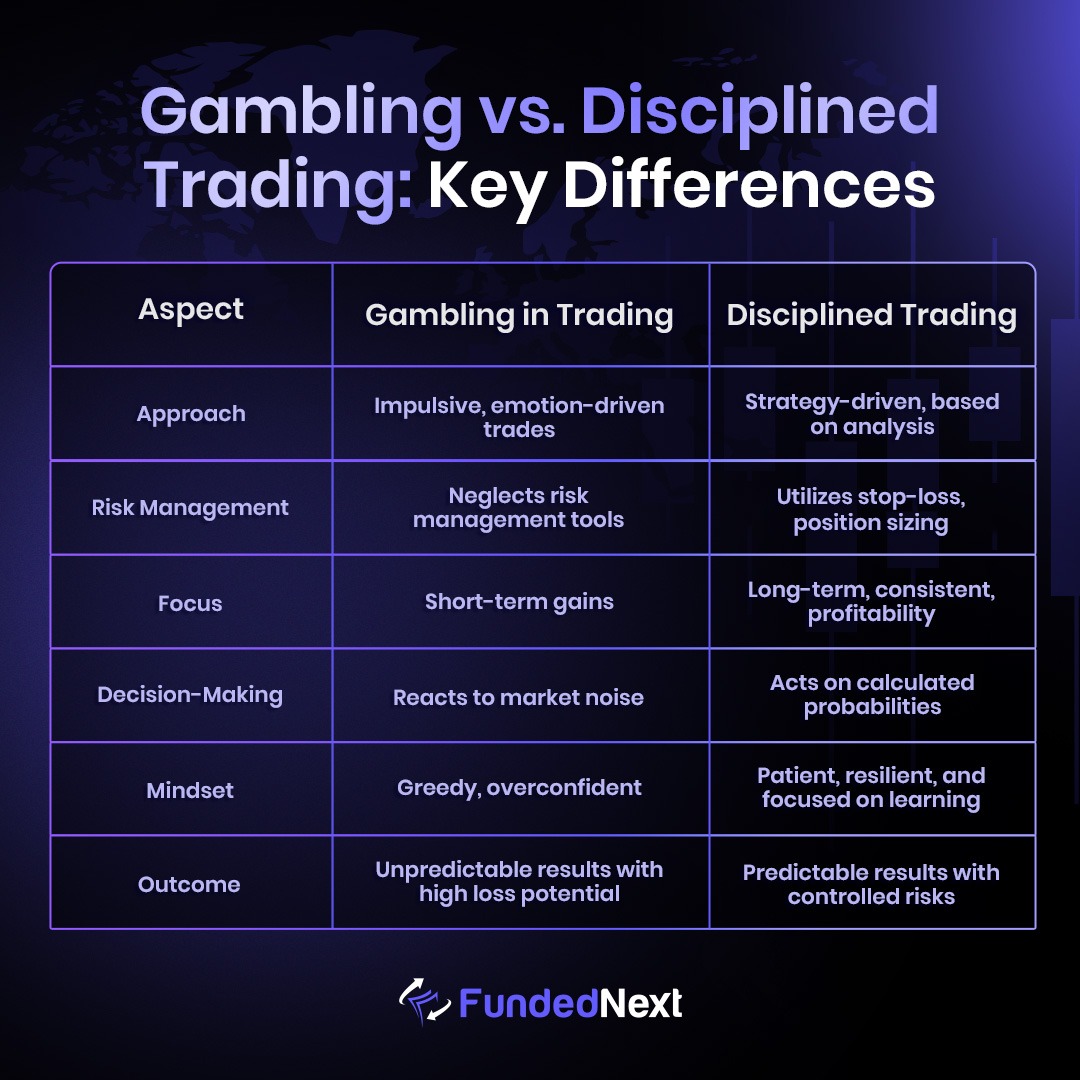
Gambling vs. Disciplined Trading: Key Differences
Consequences of Gambling in Prop Trading
Gambling behaviors can disrupt a trader’s mindset, diminishing their confidence and undermining their ability to make sound decisions.
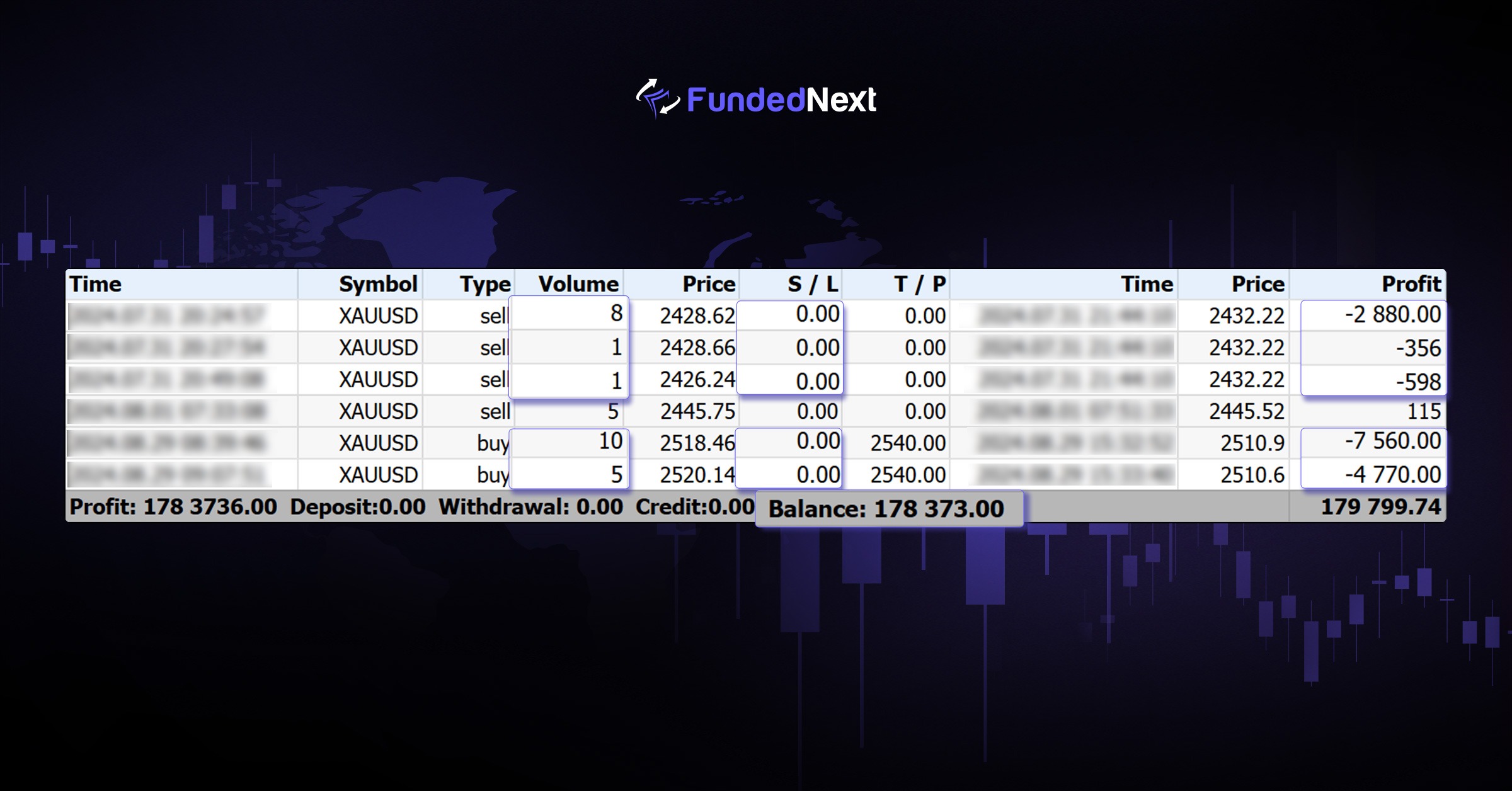
One of our traders purchased a $200K account, costing them ‘X’ amount. However, the trader tried to achieve quick success by placing aggressive trades, such as using 9-15 lots of XAUUSD in at once. The trader took on significant risk by placing large trades, using 15 lots of XAUUSD [Review the Image below], which consumed approximately $157,628 of margin—over 78% of their 200K account balance. A single unfavorable market move could push the account dangerously beyond the Daily Drawdown Limit. Despite the high stakes, the trader did not set a stop-loss, relying entirely on the market moving in their favor—a gamble that exposed them to immense risk.
Determined to recover, they continued trading recklessly, chasing losses instead of following a strategy. While a few trades made a profit, they couldn’t cover the increasing losses. Emotional decisions and the lack of risk management ultimately caused the account to breach the challenge rules.
This story highlights a critical lesson: trading is not gambling. Success demands discipline, risk management, and protecting your capital—not chasing big wins.
To avoid these kinds of scenarios and provide a better experience to our clients, At FundedNext, we are dedicated to help traders grow into disciplined professionals, for long-term success by guiding them toward a more responsible and strategic trading approach.
Professional traders typically risk no more than 1% at a time and use 20–30% of their margin, ensuring steady and sustainable profits. To discourage gambling-like behaviors and encourage responsible trading, they may be subjected to various restrictions, including measures such as reduced leverage or a 1% risk limit on active trades.
Conclusion
Success in prop trading is rooted in discipline, calculated decisions, and a commitment to long-term growth. Gambling behaviors might offer temporary wins but lead to lasting setbacks. At FundedNext, we empower traders to prioritize strategy and sustainability for consistent


