
Table of Contents
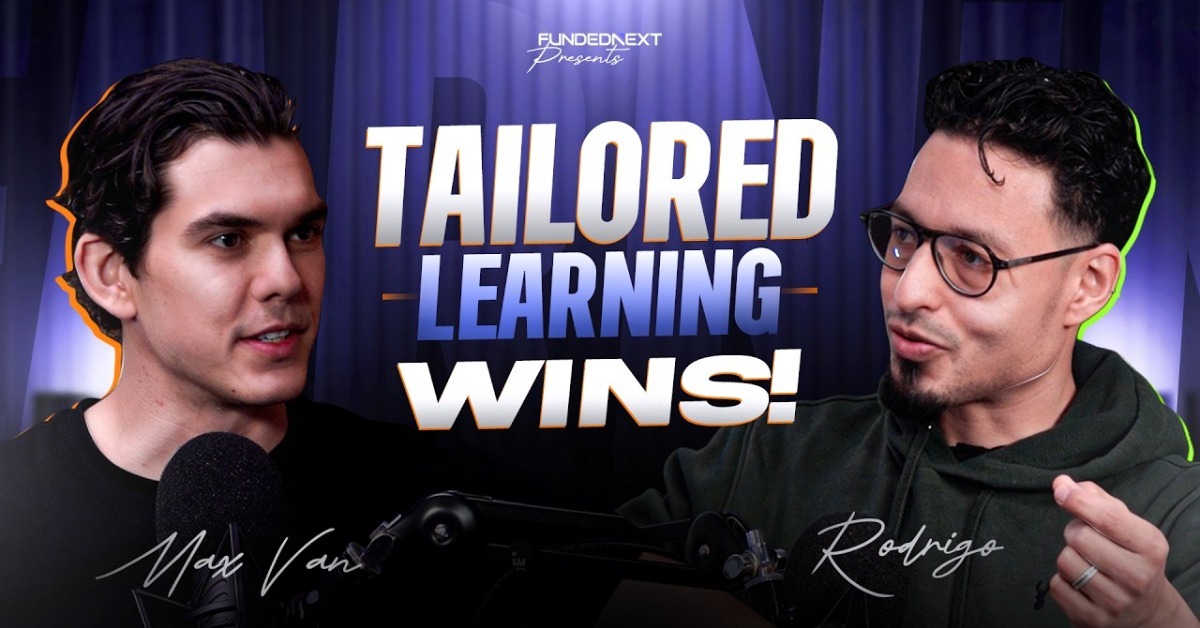
Institutional-level trading discipline hinges on the ability to use stop losses, understand liquidity, and manage psychological cycles. Max, founder of Anomalies Observatory and a trader with over six figures in simulated payout experience at FundedNext, breaks down these themes with precision on this episode of Risk Reward Radio.
Over 80% of traders lose money on highly volatile assets like gold (source: broker statistics cited by Max in the episode). Consistent profitability comes from mechanical processes and psychological resilience, not just technical skill. Max’s approach draws on institutional experience and a deep understanding of trading psychology relevant for prop firm trading and simulated trading at platforms such as FundedNext.
Mechanical Trading Versus Emotional Trading: The Stop Loss Distinction
Max separates trading into two modes: disciplined execution according to strategy, or impulsive reaction driven by emotion. He highlights the differences between a good and bad stop loss:
A good stop loss is one where you know afterwards you can sit on your hands and reassess and wait for the next opportunity. A bad stop loss is one where you feel like you’ve been triggered out and you want to get back in because it feels like it’s unfair.
Many traders abandon their technical rules after a first loss. Max points out that this breakdown is a mindset failure, leading to revenge trading and a spiral toward blown accounts. The distinction is psychological: “Not being able to accept the loss, wanting to get involved again, and trying to revenge trade to make up for those losses is pure mindset.” Those undertaking a challenge must build routines that address this.
The Institutional and Retail Divide: CFDs vs. Futures Execution
Institutional and retail trading share technical similarities, but differ in size, execution, and access. Most prop traders, including those at FundedNext, operate in a simulated CFD environment, where execution flows through a third party. Max explains:
You see so many guys on social media… when they trade CFDs right like what you and I do on MetaTrader via a prop firm or broker, that’s all contract for differences… you’re never actually entering the actual market. But with direct market access… you execute on an exchange such as the CME.
The practical effect is speed and spread. CFDs expose traders to broker-defined spreads, while futures traders can act as the spread on the ladder. However, Max affirms that simulated trading remains a proven stepping stone for capital and technical development.
Tools and Price Analysis: Using Level Two Data and Naked Charts
For tools, Max distinguishes between data-rich institutional setups and his preferred streamlined approach. With CFDs, he keeps charts simple, “naked”, and uses liquidity concepts over indicators like EMAs or MACDs. For futures, he relies on level two (order book) data and price ladders, eschewing complexity:
I just like to see the quick ticks that you see on the ladders, which is really cool to see. That baffles me till this day.
This separation supports two analytical frameworks: liquidity-driven trade locations and rapid assessment of order flow at key levels. This approach can benefit those pursuing day trading in a simulated or prop firm environment.
Understanding Liquidity: Active vs. Passive, and the Stop Loss “Hunting” Myth
Liquidity, according to Max, is the transactability of an asset, with a distinction between active (where price is trading) and passive (orders above highs and below lows). He stresses the need to debunk the myth of market makers “hunting stops” in a simulated or CFD-based environment:
No one ever sees your stops… It’s not the market makers that are hunting your stops. It’s just naturally where price will gravitate towards.
He identifies technical invalidation as the only rational place for a stop loss; if price reaches it, the trade idea is invalid. Emotional attachment to losses leads to revenge trading, not market manipulation. On platforms like FundedNext, understanding these liquidity rules is core in simulated prop firm trading.
The Psychological Cycle: Loss, Urgency, and Self-Sabotage
Both host and guest address cycles where traders react to losses with urgency, triggering emotional and physiological patterns that erode discipline. These cycles repeat until interrupted by a structured process or realization. These psychological loops are a frequent subject on the Risk Reward Radio podcast by FundedNext:
It’s a behavior loop… It literally hardwires you into a self-sabotaging trader… and it takes some traders… years. I’ve had guys come to me with over 10 years’ experience that are still stuck in that loop.
Traders often carry these emotions into subsequent sessions, compounding damage. Max advocates reframing losses as data, not identity, transforming painful experiences into neutral input for future improvement.
Handling Drawdowns: From Margin Calls to Mechanical Stop Losses
Max shares two significant drawdown events. The first was a margin call during the 2019 JPY flash crash, where he experienced a total loss due to no stop loss in place. The second involved deep drawdown trading gold, noting that 80-95% of retail traders lose money on gold according to broker stats. His recovery demanded mechanical stop loss discipline, a key lesson emphasized in this episode for those pursuing a FundedNext challenge:
I’m as mechanical as I can get with my stop loss… For us CFD traders, yes, it will protect you for 99% of the cases. So, I’m religious about my stop loss.
He emphasizes that stop losses protect both financial and mental capital by creating psychological distance from outcomes. For those day trading or pursuing prop firm qualification, this mechanical approach is essential.
Expert Analysis: The Role of Process, Routine, and Psychological Distance
Max and the host both highlight that sustainable trading performance is a lagging indicator of the present process. Max describes the need to monitor factors like sleep, diet, exercise, and relationships, scoring them daily to reinforce process-oriented discipline. This topic is explored in detail during Risk Reward Radio ep 18, available from the FundedNext trading podcast library:
If you focus on that process now and you score it on a day-to-day basis, then that is going to have an impact on… performance on your P&L.
Key methodologies discussed:
- Routine-driven checklists or reality checks for readiness before sessions.
- Mechanical stop loss usage to enforce detachment from results.
- Separation of trade variance from personal identity, building self-respect through a disciplined process.
Actionable Takeaways for Traders
- Set stop losses at objective invalidation points; if you feel compelled to immediately re-enter after a stop hits, reassess your placement and emotional state. This discipline is core to FundedNext and similar simulated trading platforms.
- Use a pre-session checklist or perform a “green light” reality check to confirm mental readiness before day trading. Pause if any external factors disrupt clarity.
- Distinguish between CFD-based simulated trading and direct market access (DMA): understand that, in simulated environments, fills, spreads, and order visibility differ from futures.
- Trade “naked” charts with minimal indicators when using CFDs; focus on liquidity locations and price action rather than relying on overlays like EMAs or MACD.
- Use level two data and price ladders to monitor institutional activity on futures markets; look for rapid changes at points of interest but avoid overcomplicating with multiple advanced tools.
- Reframe losses as statistical outcomes; track drawdowns and results objectively, then treat negative trades as data input, not personal failure.
- Monitor process factors (sleep, diet, exercise, relationships) and score yourself daily to maintain performance discipline as a lagging indicator of routine. Insights on this are also discussed in Risk Reward Radio episode 18.
Conclusion
Max’s signature trading methodology fuses institutional practice with personal psychological management. A mechanically placed stop loss, chosen at true invalidation points, serves to protect not just balance but also a trader’s psychological capital. Liquidity in simulated trading is about understanding how prices move toward zones of supply and demand, not about institutional actors targeting individual stops.
The clearest path to consistent simulated trading results is process rigor, daily self-checks, and emotional detachment from outcomes. FundedNext reinforces these principles throughout its prop firm trading programs and educational content like the Risk Reward Radio podcast.
This episode demonstrates that technical knowledge matters, but mechanical process and mindset ultimately separate long-term winners from reactionary, emotion-driven cycles. Future episodes will explore additional institutional techniques and deep dives into trader psychology.


